|
|
 |
|
STYLOSPOT is the fastest growing lifestyle and business social network,which has every thing
you need
to achieve your goals and live more stylo life, meet and greet with friends, make new
connections for life, share your thoughts, live the way you want and unleash your income potential ! |
|
|
 |
|
 |
|
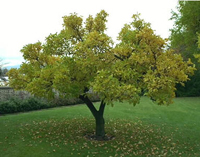
1. stylospot is 1st social network on earth which is using renewable energy to both power and cool their servers, whereas a number of green hosts only offset the electricity used to power their servers. That represents a big difference, because servers generate a lot of heat. For every watt of electricity that a server uses, 1-2 watts of electricity are typically required to cool it. It means that STYLOSPOT is investing in about twice as much renewable energy per server basis, as those green hosts only using renewable energy to power their servers.
2. Stylospot has invested in Green -e certified Renewable Energy Credits (RECs) means that all of stylospot RECs are verified, tracked and monitored. Surely, there are cheaper carbon credits out there, but stylospot wanted to go green the right way. Stylospot can’t very well build a wind farm in downtown Houston where our servers are installed in USA, so its doing the next best thing and greening its energy at the source with rock solid RECs.
3. stylospot has planted 5000 trees on its launching in Pakistan & its our pledge that we will plant a tree for every person who will join stylospot family as per policy .
|
|
| |
|
|
 |
What is Climate Change? |
 |
|

Climate change or global warming is the result of a build up of greenhouse gases (GHG), mainly carbon dioxide, in the atmosphere. GHGs serve to trap the suns heat in the earth’s atmosphere, forming the ‘greenhouse effect’ – a natural phenomena that keeps the earth warm. However, when the concentration of GHGs gets too large, and the earth’s equilibrium gets out of balance, we experience a dangerous rise in temperatures, which can result in severe and extreme weather conditions. In effect, earth’s blanket thickens and our atmosphere absorbs and holds more heat than it radiates back. This could directly affect rainfall, flooding and droughts, agriculture, economies, health and bio security.
The reason for the unprecedented rise in GHGs is largely a direct result of human intervention. In its 2001 report, The United Nations' Intergovernmental Panel on Climate Change (IPCC) stated, "There is new and stronger evidence that most of the warming observed over the last 50 years is attributable to human activities." Infact, since the industrial age began around 150 years ago, man’s burning of fossil fuels — coal, oil and gas — to fuel machinery has meant a rise in GHG emissions, mainly carbon dioxide, for the past 2 centuries. Some scientists estimate the increase in carbon dioxide emissions over the last 150 years to be 35 – 60 percent.
The IPCC projects that global temperatures will raise an additional 3 to10 degrees Fahrenheit (1.6 to 5.5 degrees Celsius) by century's end.
|
|
|
 |
|
| |
|
| |
| |
|
| |
|
Why The role of trees in offsetting your emissions |
|
|

Trees are green machines that act as natural filters of our air. Through the process of photosynthesis they absorb carbon dioxide (a key GHG and principle contributor to global warming) from the atmosphere and store it in their trunk, branches, leaves, roots, soil and foliage, while releasing oxygen back out.
Whereas deforestation, degradation and poor forest management reduce carbon storage in forests, sustainable management, planting, and rehabilitation of forests can increase carbon sequestration. Infact the United Nations Food and Agriculture Organization states “global carbon retention resulting from reduced deforestation, increased forest re growth and more agro-forestry and plantations could make up for about 15% of carbon emissions from fossil fuels over the next 50 years (2006).”
Not only are trees an effective means for absorbing and storing the carbon you emit, they have far reaching benefits that extend well beyond that of filtering the air. Sustainably managed forests and urban forestry projects have multiple environmental and socio-economic functions important at the global, national and local scales, and play a vital part in sustainable development. Forests are sources of wood products. They help regulate local and regional rainfall. And forests are crucial sources of food, medicine, clean drinking water, and immense recreational, aesthetic, and spiritual benefits for millions of people.
|
|
|
|
|
| |
|
| |
|
| |
|
Reduce Your Emissions |
|
|
Reducing your emissions is a vital part of combating climate change. We encourage everyone to be aware of their energy usage and its effects, and take steps to reduce this.
What remains can be offset through our Carbon Free program
Ask your friends , “ is there any social network carbon free”
-
Use only e-paper and recyclable paper
-
By being more energy efficient at home, you can reduce your emissions and lower your energy bills by more than 30%.
-
Adjust your air conditioner and heater thermostat when you go out and shut down your system when you are away for extended periods.
-
Turn off and unplug stereos, radios, TVs, and DVDs when you leave for holidays. These appliances have a stand-by function that uses energy even when they are turned off.
-
Close doors to unused rooms trapping heating or cooling in rooms in use.
-
Consider switching to compact fluorescent lighting. Compact fluorescent light bulbs use about 75 percent less energy than incandescent bulbs.
-
Insulating your walls and ceilings can save 20 to 30 percent of home heating bills and reduce CO2 emissions by as much as 1 tonn per year.
-
Clean all of your heating and cooling appliances, making sure they are dust free. Energy is lost when heating units have to work harder to draw air through dirty filters. Ensuring that your air conditioner filter is clean can save 5 percent of the energy used.
-
Wash your dishes manually, or ensure your dishwasher is full when you run it. Allow your dishes to air dry, by not using the heat in the drying cycle can save 20 percent of your dishwasher's total electricity use.
-
Where possible walk or bike to your destination. Fuel use through transport constitutes a large proportion of total UK emissions.
-
Recycle glass, metals, and plastics.
-
Plant shade trees and paint your house a light color if you live in a warm climate or a dark color if you live in a cold climate.
-
Turn your refrigerator down.
-
Select the most energy-efficient models when you replace your old appliances. Look for the Energy Star Label - your assurance that the product saves energy and prevents pollution.
-
Slow down and drive sensibly. The faster and more aggressive you drive, the more petrol your car uses.
|
|
|
|
|
| |
|
| |
|
Some question which are asked by us again and again |
|
|
|
- Where are trees planted?
- Trees are planted in Pakistan.
|
|
|
|
|
| |
|
|
|
| |
|
|
|
 |
|
|
|
|
This portal and its contents are copyright © 2006-2016. STYLOSPOT™ All rights reserved.
Privacy Statement & Terms of Use SITE MAP
"STYLOSPOT" is Trademark of Cynosure Private Limited®.
Unauthorized use of our Trademark is strictly prohibited.
Reproduction in whole or in part in any form or medium without express written permission of
Cynosure Private Limited® is prohibited. Contact Us |
|
|
|
|
|